
Deck Restoration
- Inspection of joists, ledger board, and footings for rot or movement
- Replacement of split, cupped, or rotted deck boards
- Re-securing loose railings, stairs, and hardware to code
- Sanding and prep of the walking surface
- Stain or penetrating sealer rated for freeze-thaw climates
- Cleanup and haul-off of old material
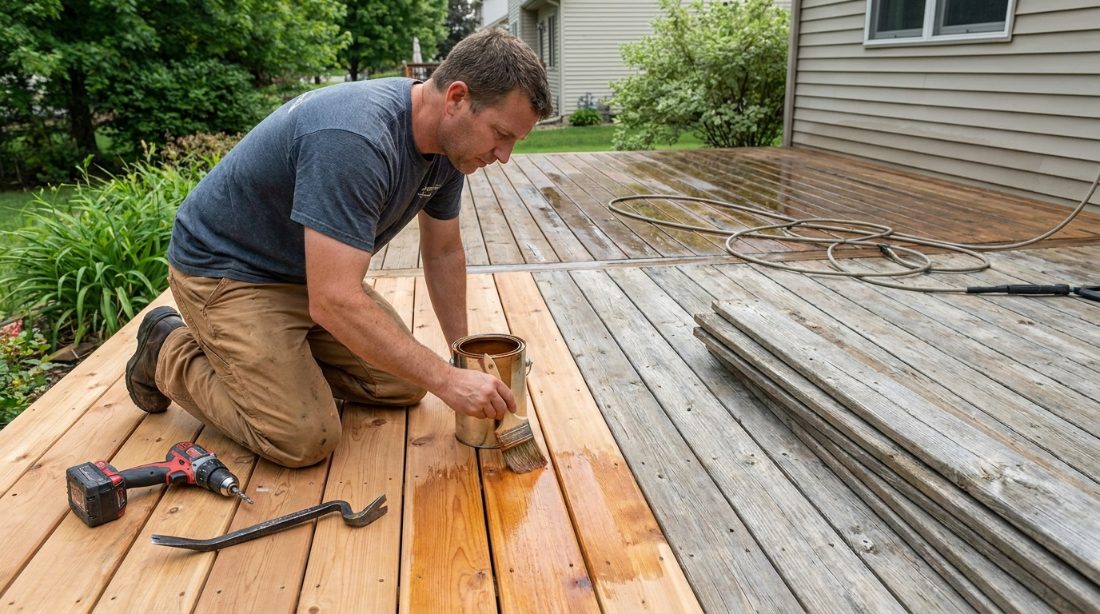
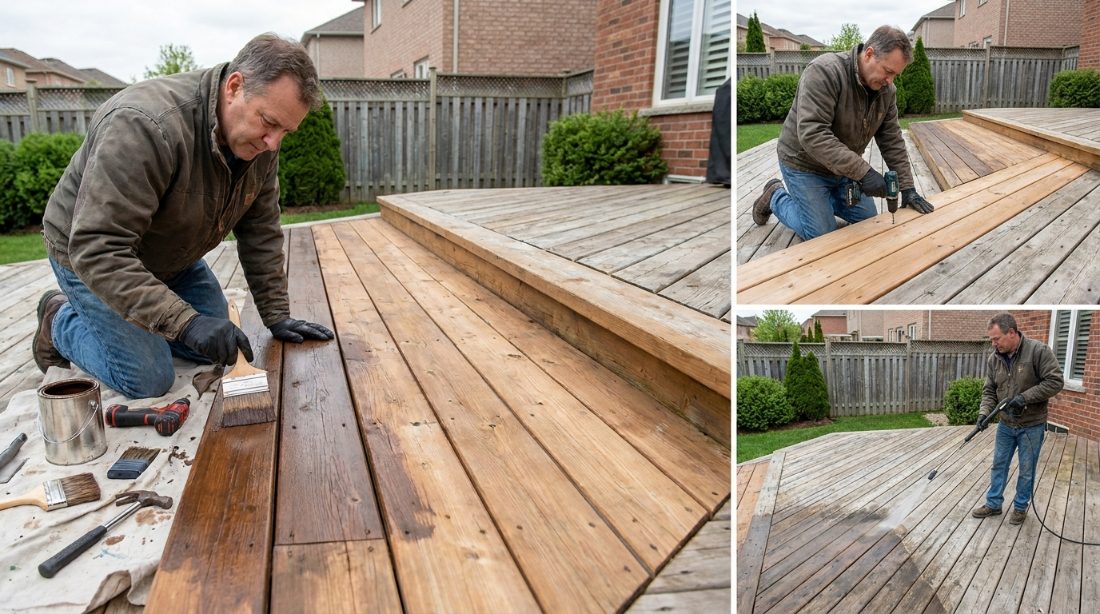
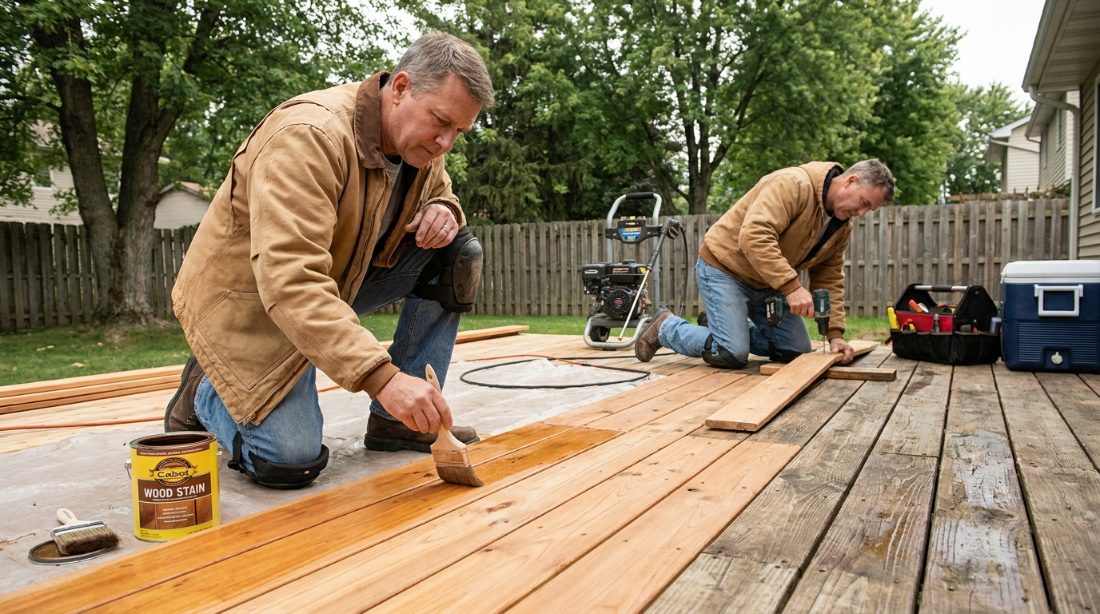
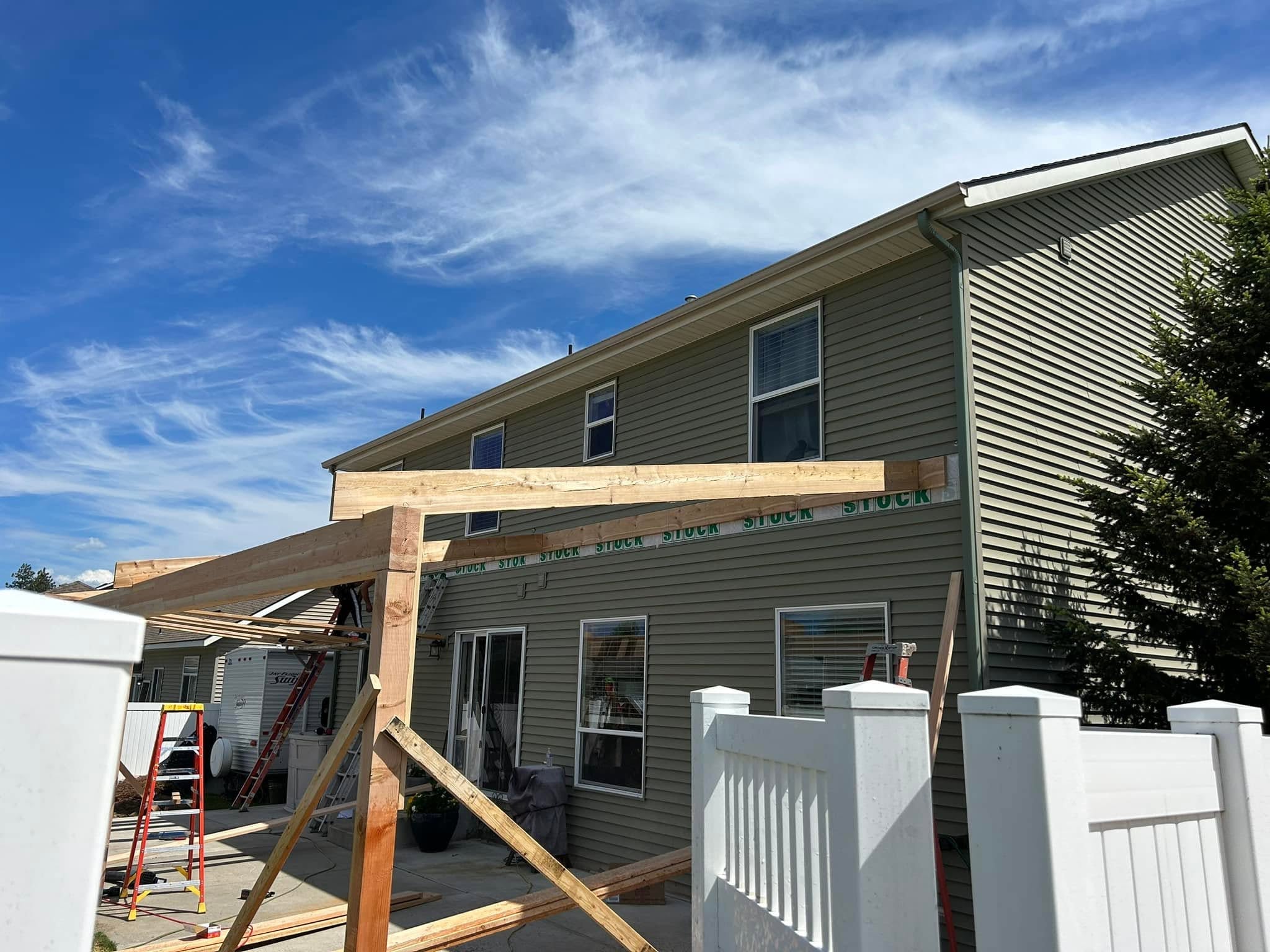
A deck in North Idaho takes a beating. Snow sits on it for months, meltwater soaks into the end grain, and the freeze-thaw cycle pries fasteners loose and splits boards from the inside out. By spring, what looked solid in October can have soft boards, a wobbly rail, and gray weathered wood that's lost all its finish. We start every deck with an honest look underneath — joists, the ledger board where the deck ties into the house, and the footings — because that's where the safety issues hide. A loose ledger or a rotted post is how decks fail, and it's not something you want to find out the hard way.
For repairs, we swap out any board that's split, cupped, or soft, re-secure railings and stair stringers to current code, and replace corroded fasteners with coated or stainless hardware that holds up to the wet. If the structure is sound and you just want it looking right again, we sand the walking surface, wash it, and let it dry fully — that last part matters. Stain over damp wood in our climate traps moisture and peels by the next season. We wait for the right window, then put down a penetrating stain or sealer built for freeze-thaw so water beads instead of soaking in.
“A deck that sat under snow all winter needs to dry fully before stain goes down, or you're just sealing moisture in.”
We'll tell you straight whether your deck needs a repair or a rebuild. Sometimes a few boards and a good seal buys you another decade; sometimes the framing is too far gone and patching it is throwing money at it. Either way you'll get the real answer, not the one that runs up the invoice.
Related services we handle on the same job.
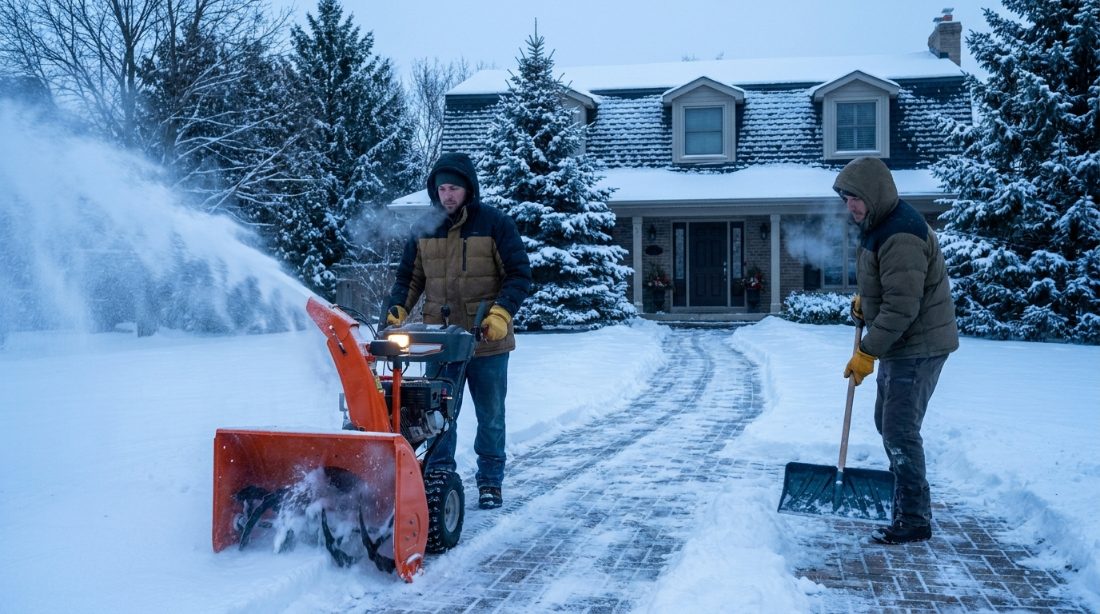
Snow Removal & Winter Services
Reliable driveway and walkway clearing plus roof and ice-dam management through the North Idaho winter.
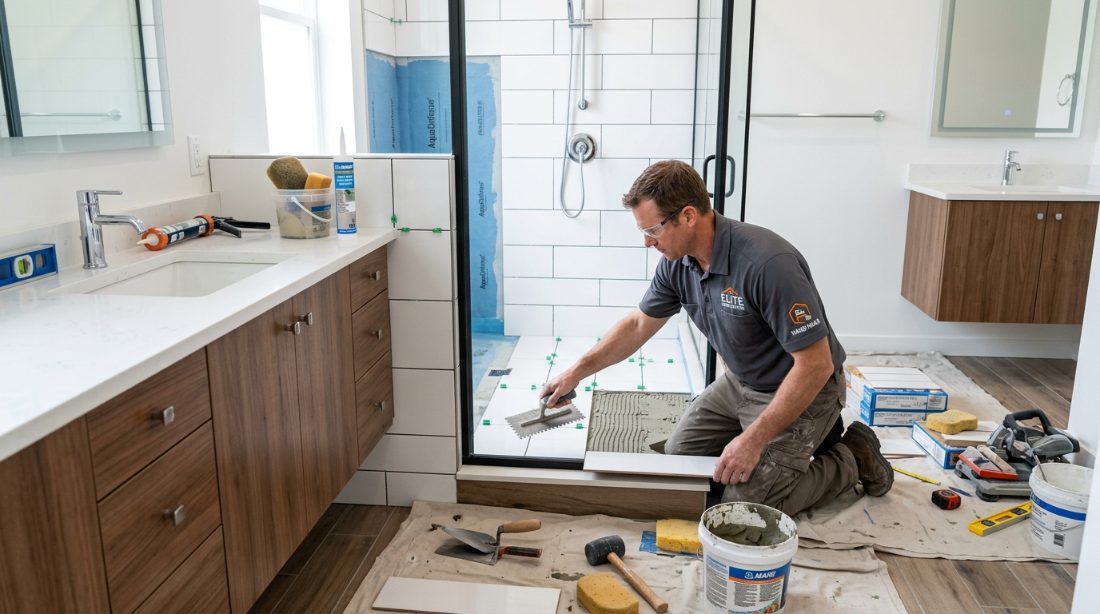
Bathroom Remodels
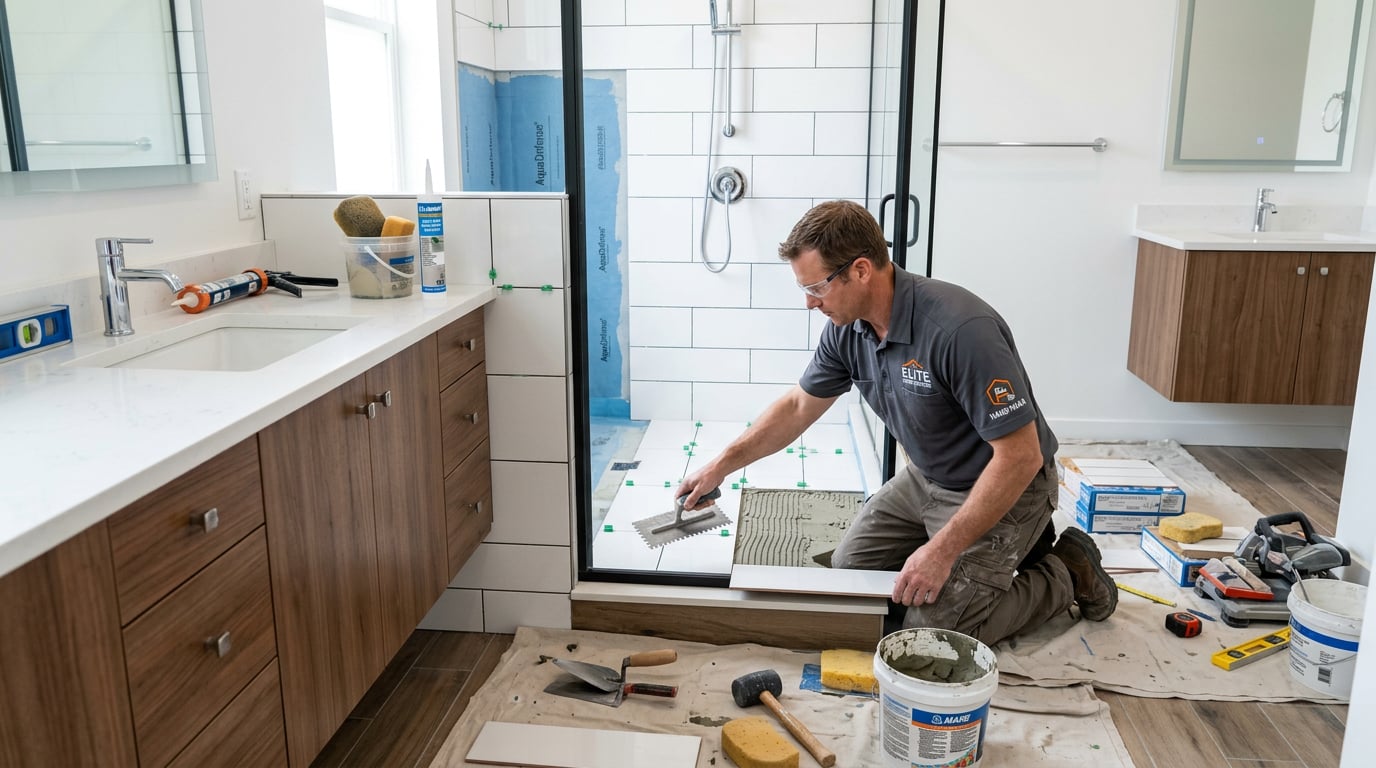
Tile showers, vanities, flooring, and fixtures with proper waterproofing and exhaust venting for our climate.
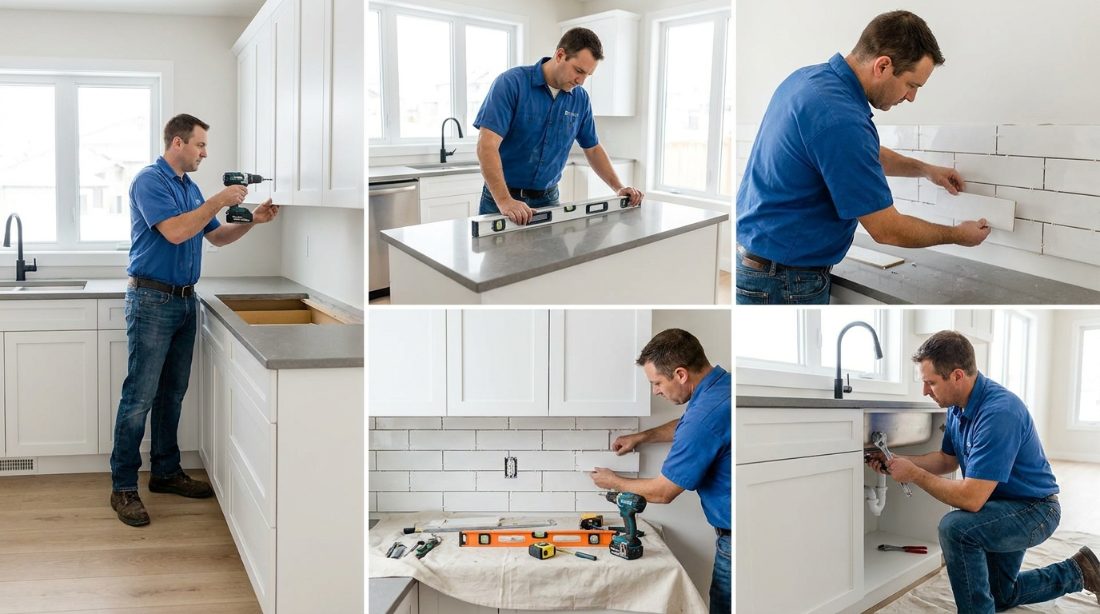
Kitchen Renovations
Cabinets, countertops, backsplash, and lighting with the plumbing and electrical done in the right sequence.